

If you are over forty and you have been thinking about a calm instrument for the house, you have probably met both of these before. The kalimba is the little wooden box with metal tines that you hold in your hands. The steel tongue drum is the round metal drum that sits on a table and rings like a bell. They look different, they sound different, and they ask different things of you. I have played both in my sunroom for months, and the honest answer is that one of them is much easier to start than the other.
I am Bernadette Lowry. I spent twenty-four years in community mental health, and for the last ten of those years I kept a small hand drum in my bag for group sessions. I am not a music therapist and I am not a musician. I played piano badly as a kid and I learned these instruments the way most adults do: by sitting down with them and making sounds until the sounds turned into songs. The Newlam kalimba is the instrument I reach for most mornings with my coffee, and I would like to tell you why.
How I Compared Them
I did not test these instruments in a studio. I tested them the way you will use them. I played the Newlam kalimba in my sunroom in the morning, with the sliding door open and the neighborhood waking up. I played the steel tongue drum in the same chair, same coffee, same ten minutes. I paid attention to three things: how fast I could play something that sounded like music, how the instrument felt in my hands, and whether I actually wanted to pick it up again the next day.
I should also say what I did not do. I did not compare them at the same price, because they are not in the same price class. A decent steel tongue drum costs several times what a starter kalimba costs. That is not a small detail. If you are new to instruments, the price difference matters, because it changes how you feel about making mistakes. I would rather you start with something modest and play it every day than spend a lot and feel you have to justify it.

The Newlam Kalimba, Up Close
The Newlam kalimba has seventeen keys, which sounds like a lot until you realize the keys are just laid out in a line. The notes run from low to high along the tines, and every key has the letter and the musical note engraved right on the metal. You do not need to read music. You do not need to memorize anything. You look down, you see the note, you press the tine with your thumb, and the note comes out. The included instruction book walks you through a first song in minutes.
The whole instrument weighs 11.52 ounces and measures about seven inches long. It is made of naturally air-dried wood with spring steel tines, and it comes with an instruction book, a flannelette bag, and a cleaning cloth. I keep mine in the bag when I am not playing it, which means it stays dust-free and ready. The bag is not a luxury. It is the reason my kalimba still looks new after months of daily use.
The Steel Tongue Drum, Up Close
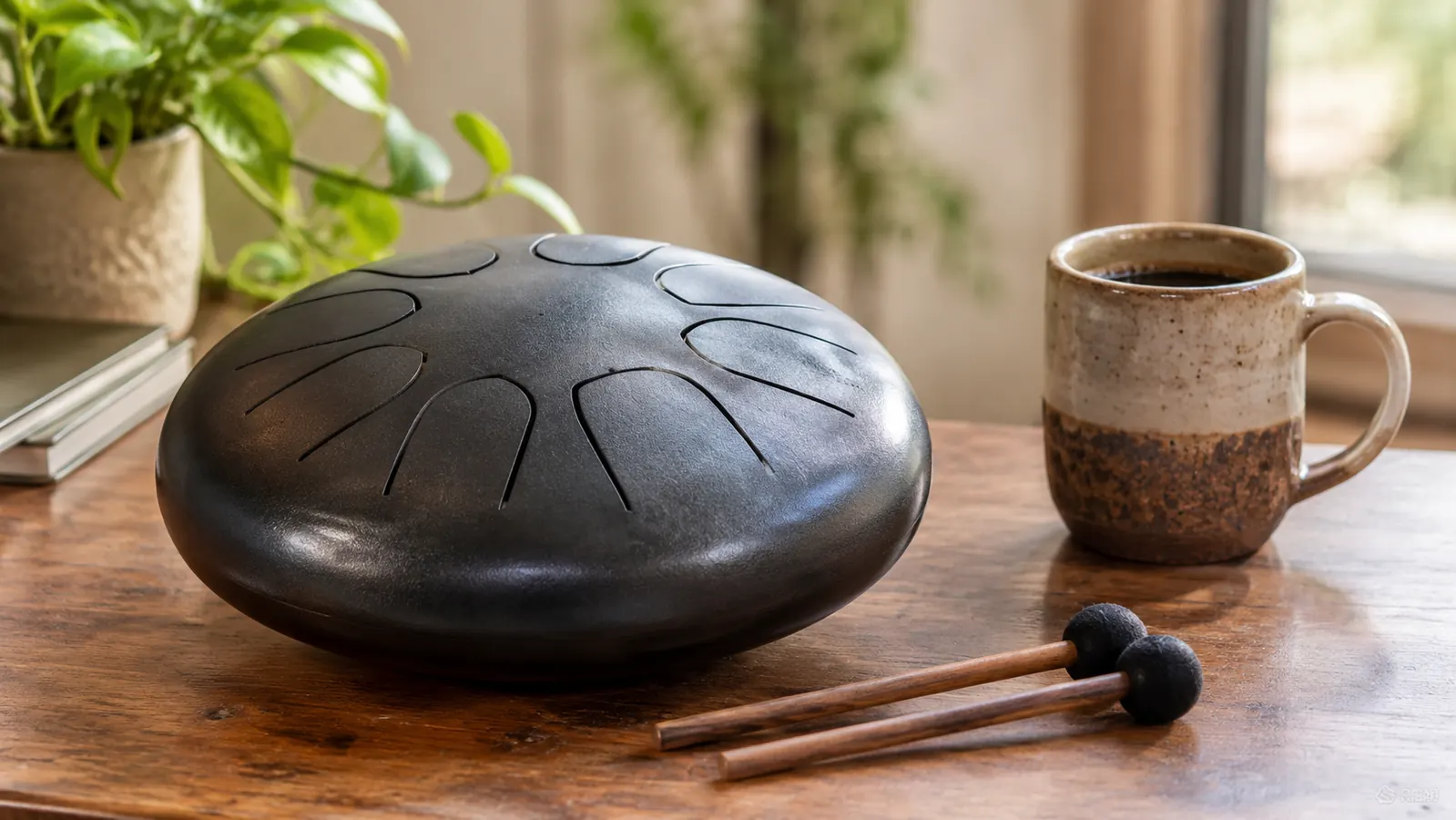
The steel tongue drum is a different animal. It is a round steel shell with slots cut into the top, and each slot is a tongue that produces a note when you strike it. You play it with your fingers or with soft mallets, and it sits on a table or on your lap. The sound is deep, warm, and resonant. It rings and hangs in the air in a way that the kalimba simply cannot match.
But it is heavier, it is bigger, and it costs more. Most starter tongue drums do not come with note labels on the tongues, so you learn by ear or by numbered tabs that you place yourself. That is not a flaw if you want to learn by ear. It is a real hurdle if you are a beginner who wants to play a recognizable song tonight. The kalimba hands you the notes. The tongue drum asks you to find them.
| Newlam Kalimba | Steel Tongue Drum | |
|---|---|---|
| Price | A modest first-instrument price | Usually several times the cost of a starter kalimba |
| Learning curve | Engraved letters and notes on the keys, first song in minutes | No note labels on most models, you learn by ear or numbered tabs |
| Sound | Rich, ethereal timbre, soft and close to the player | Deep, warm, resonant, fills a room |
| Portability | 11.52 ounces, fits in the included flannelette bag | Heavier steel, needs two hands and usually a padded case |
| Volume | Quiet enough for a sunroom without disturbing anyone | Louder and more projecting, harder to keep soft |
| Comfort while playing | Held in both hands, thumbs do the work, easy on the wrists | Played with mallets or fingers on a table, arms extended |
| Best for | A first instrument for a beginner who wants instant songs | Someone who wants a meditative, percussive sound and does not mind a longer start |
Where the Newlam Kalimba Wins
The Newlam kalimba wins on the only thing that matters for a beginner: how fast you can make something that sounds like music. With engraved letters and notes on every key, you are never guessing. I played my first recognizable melody within five minutes of opening the box. Walt, my husband, who claims he is tone deaf, picked it up one evening and played a tune before the kettle boiled. That is the whole argument for the kalimba in one sentence: it makes a non-musician feel like a musician almost immediately.
It also wins on portability and comfort. At 11.52 ounces, it is genuinely a lap instrument. You hold it in both hands and your thumbs do the work, which is easy on the wrists and easy on the shoulders. I carry mine from the sunroom to the kitchen without thinking about it. The tongue drum needs two hands to move and usually a padded case. The kalimba lives in its flannelette bag and goes wherever I go.
Start with the instrument that lets you play a song tonight
The Newlam 17-key kalimba comes with engraved notes, an instruction book, a flannelette bag, and a cleaning cloth. If you want to feel musical within minutes, this is the one.
Amazon Check Today's Price on Amazon →Where the Steel Tongue Drum Wins
I am not going to pretend the tongue drum loses everywhere. It wins on sound, and it wins by a lot. The steel tongue drum has a deep, resonant voice that fills a room. When I play mine in the sunroom, the notes hang in the air and I feel the vibration as much as I hear it. The kalimba is intimate and close. The tongue drum is expansive. If you want to feel the sound in your chest, the drum is the better instrument.
It also wins on the kind of playing you do. A tongue drum invites you to slow down. You strike a tongue, you let it ring, you wait, you strike another. There is no melody to chase if you do not want one. That makes it a wonderful instrument for the ten-minutes-with-coffee routine, especially for someone who does not care about playing songs and just wants to make sounds that feel good. If that is what you are after, the drum is worth the extra money and the longer learning curve.
The kalimba hands you the notes. The tongue drum asks you to find them. For a beginner, that difference is everything.
Sound, Volume, and the Sunroom Test
Volume matters more than people expect. The kalimba is quiet. You play it for yourself, and the person across the room hears a soft, ethereal chime. That is a feature, not a limitation. I can play mine while Walt reads in the same room and neither of us is bothered. The tongue drum is louder and more projecting. It is not obnoxious, but it is present. If you live with someone who values quiet, the kalimba is the easier roommate.
Tuning is another difference. The Newlam kalimba comes in C tuning, which is the most common and the easiest to find songs for. The steel tongue drum is usually tuned to a pentatonic scale, which means almost anything you play sounds pleasant. That is a genuine advantage for the drum. But the kalimba has the same advantage in a different way: because the notes are engraved, you can follow along with any simple songbook, and the C tuning means you are not translating anything.
What the First Week Actually Looks Like
Day one with the Newlam kalimba: you open the box, you read the little instruction book, you press a tine, and you are already playing a note. By day three you have a melody. By day seven you are playing two or three songs and you have started to notice that the instrument sounds different depending on where you press the tine and how hard. There is real depth here, but it is depth you can discover at your own pace.
Day one with the steel tongue drum: you strike a few tongues, you smile at the sound, and then you sit with the question of what to do next. The drum does not hand you a melody. You have to find one, or you have to be content with making sounds that feel good. Some people find that freedom liberating. Other people find it frustrating. I have seen both reactions in my own sunroom, and I have seen both reactions in the groups I used to run. The people who do well with the drum are the ones who do not need the song to be handed to them.
A Note on Materials and Build
The Newlam kalimba is made with naturally air-dried wood and spring steel tines. That matters more than you might think. Air-dried wood is stable, which means the instrument holds its tuning and does not warp in a house that gets humid in the summer. The spring steel tines are responsive, so you do not have to press hard to get a clear note. The included cleaning cloth is there because fingerprints and oils are the main thing that dulls the sound over time. Wipe the tines after you play and the instrument stays bright.
The tongue drum is a solid steel instrument, and steel is forgiving in a different way. It does not mind humidity, it does not mind being moved around, and it will probably outlast you. The tradeoff is weight and price. A steel tongue drum with a comparable number of notes costs several times what the Newlam kalimba costs. For a first instrument, that is a lot of money to spend before you know whether you will actually play it.
What About Gifting One
If you are buying for someone else, the kalimba is the safer gift. It is modestly priced, so the giver does not feel extravagant and the receiver does not feel pressured. It comes in a nice flannelette bag with an instruction book, so it feels complete. And it has a 180-day warranty, which is a quiet way of saying the company stands behind it. The tongue drum is a more impressive gift, but it is also a more demanding one. I would only give a drum to someone who has already said they want one.
Who Should Buy Which
Buy the Newlam kalimba if you are a true beginner, if you want to play actual songs within your first session, or if you want an instrument you can hold in your hands and take from room to room. It is the lower-cost, lower-frustration choice. Buy the steel tongue drum if you already know you want a meditative, percussive sound and you are willing to spend more and learn by ear. Both are good instruments. They are just good in different directions.
I will also say this. Most adults I know who bought a tongue drum first and got frustrated ended up buying a kalimba anyway. Nobody I know has done the reverse. The kalimba is the instrument that gets played, and an instrument that gets played is the one that actually helps you build a calm daily routine. The Newlam brand has a 4.8-star rating from over fifteen thousand reviews and a 180-day warranty, which tells me I am not the only one who found it easy to live with.
The easiest first instrument I have found
The Newlam kalimba has a 4.8-star rating from over 15,000 reviews and a 180-day warranty. If you are still deciding between the two, start here.
Amazon Check Today's Price on Amazon →