
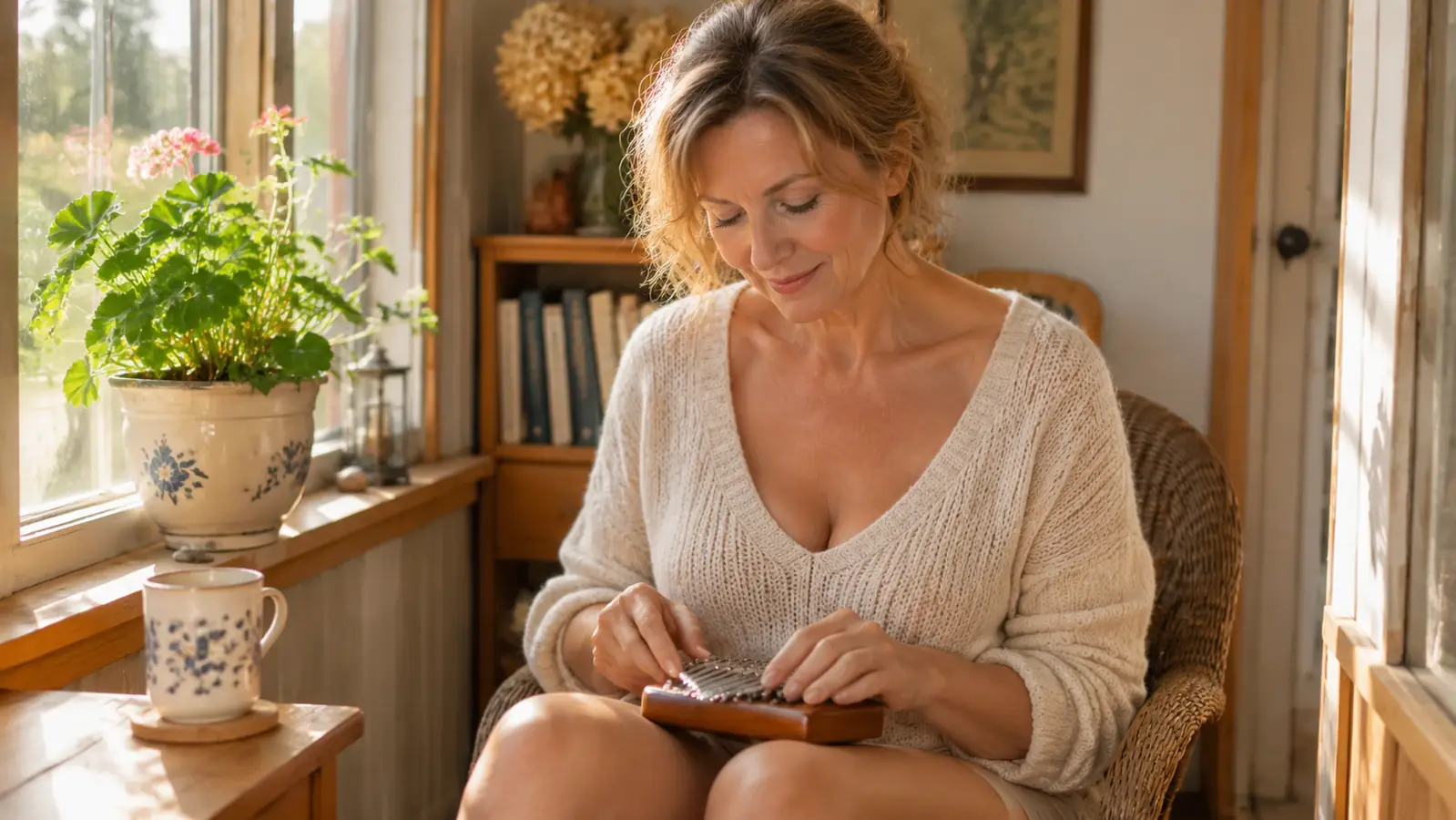
I did not set out to collect instruments. After 24 years in community mental health, I learned that a person often settles faster when their hands have something to do, so I kept a small hand drum in my office for group sessions. When I retired and moved that drum to the sunroom at the back of our house in Albany, my husband Walt, who claims he is tone deaf, asked what I planned to do with a room full of music I could not play. The honest answer was that I did not know. Then a Newlam kalimba arrived in the mail, and it turned out to be the answer.
A kalimba, in case you have not met one, is a small wooden thumb piano. You hold it in both hands and press the metal tines with your thumbs. That is the whole technique. The Newlam 17 key version is 7.08 x 5.08 x 1.18 inches and weighs 11.52 ounces, which means it is roughly the size and weight of a thick paperback. The tines are spring steel, the body is naturally air-dried wood, and the tone is described, accurately, as rich and ethereal. It is the kind of sound that makes you slow down without being asked.
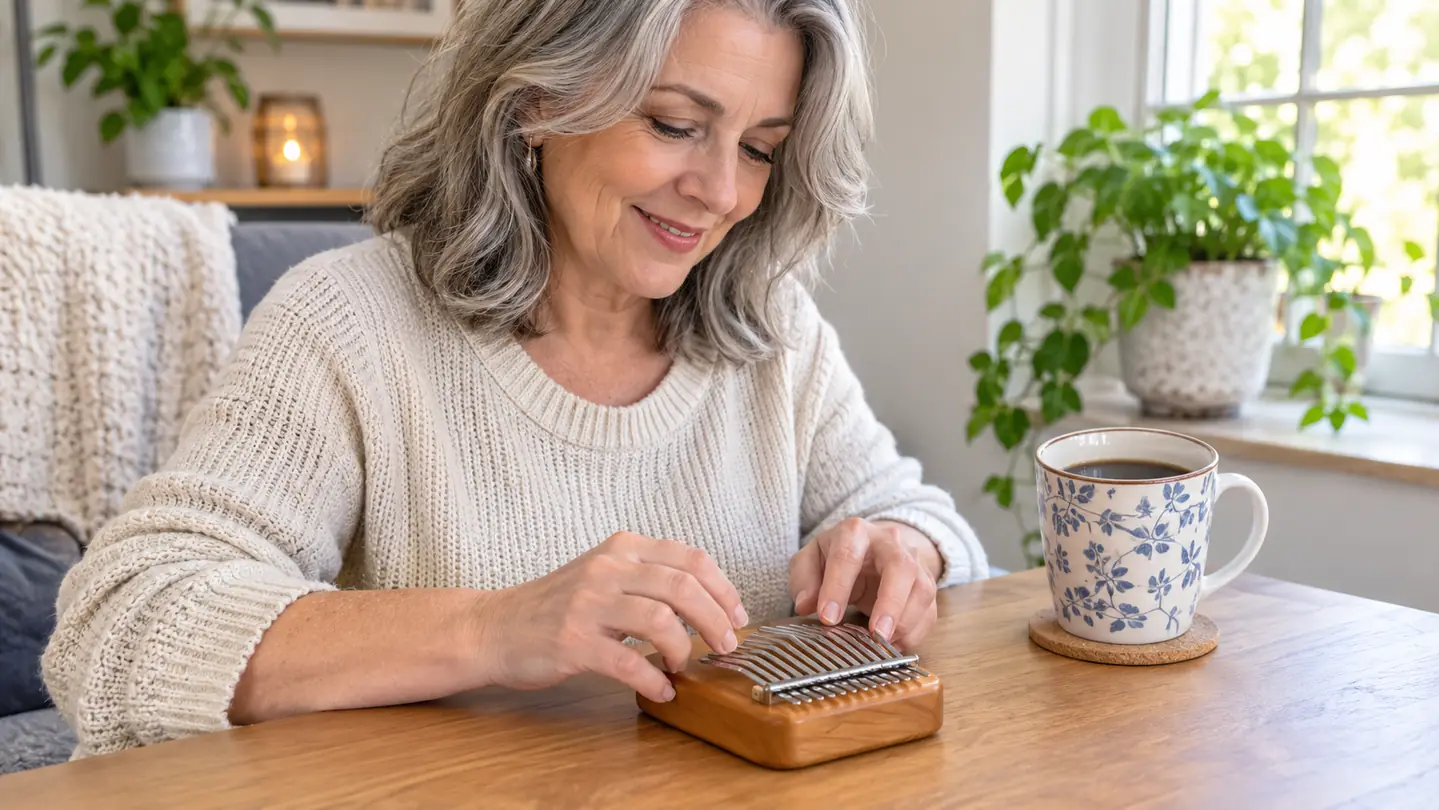
I should be clear about what this instrument is not. It is not a treatment for anything. I spent my career in case management, not music therapy, and I would never claim that a thumb piano can do what a licensed professional does. What I can tell you is that ten minutes with the kalimba most mornings became the quietest part of my day, and that quiet hour is worth protecting.
Walt was skeptical. He sat across from me at the kitchen table while I fumbled through my first notes, and he said, in the patient voice he uses for mechanical things, that it sounded like a music box that had been left in the rain. I kept playing anyway, because the instruction book that came with it promised I could learn my first song within five minutes, and I am stubborn enough to test a promise like that.
The promise held. The first song took me about four minutes, which is not the same as playing it well, but it was recognizable, and Walt stopped pretending to read his newspaper and just listened. That is the moment I should have known the kalimba was going to become a regular part of the house.
What surprised me was how little the instrument asked of me. There was no tuning, no setup, nothing to learn before I could make a pleasant sound. I sat down, I pressed two tines, and the room got quieter. For someone who spent decades watching people try to find small, reliable ways to settle themselves, that felt like the whole point.
The first song took me about four minutes. Walt stopped pretending to read his newspaper and just listened.
The 17-key Newlam kalimba is the one I reach for every morning
Engraved letters and notes on the keys, a flannelette bag, a cleaning fabric, and an instruction book that actually gets you playing in minutes. No experience needed.
Amazon Check Today's Price on Amazon →The routine built itself. I play for about ten minutes most mornings with my coffee, and again at night before bed. The Newlam comes with an instruction book, a flannelette bag, and a cleaning fabric, so it is easy to keep it on the sunroom shelf and easy to carry it to the kitchen table. The 180 day warranty is a small thing, but it tells you the company expects the instrument to last.
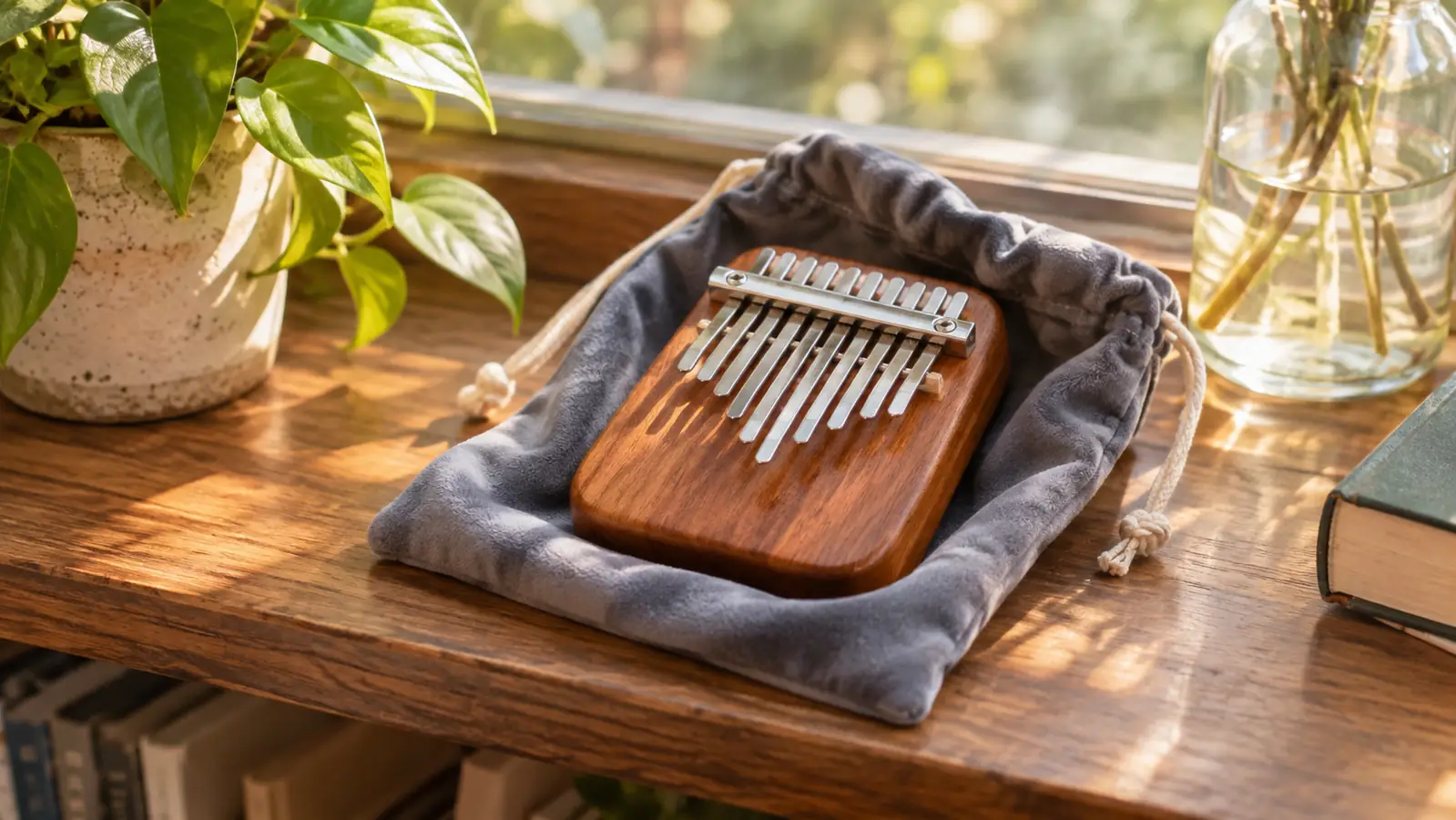
The engraved letters and musical notes on the keys are what make this work for a beginner. You do not need to read music or remember which tine is which note. You look down, you see the letter, you press. My daughter, who lives out of state, called while I was practicing and asked if I had bought a music box. I told her it was a kalimba, and she said it sounded like the kind of thing I would retire with. She was not wrong.
Walt still claims he is tone deaf. He also now asks, most evenings, whether I am going to play before bed. That is the closest a man like him will ever come to requesting a song. I take it.
I have also learned that the kalimba is a good companion for a slow afternoon. The sound is not loud enough to fill a room, which is exactly why I like it. It stays close to you. It does not demand an audience. You can play the same four notes for ten minutes and it sounds like a meditation, not a mistake.
There is something about the instrument that does not ask anything of you. You do not tune it, you do not plug it in, you do not need a lesson plan. You sit down, you press two or three tines, and the sound is already pleasant. For someone who spent decades helping people find small, reliable ways to calm themselves, that is the whole point.
What I'd Tell You If We Were Sitting at My Kitchen Table
If you are over 40 and you want a calm, hands-on instrument at home, I would tell you this: you do not need musical training, and you do not need to be good at it. You need an instrument that sounds pleasant even when you play it badly, and the Newlam kalimba is exactly that. The engraved notes make the first session easy, the flannelette bag makes it portable, and the rich, ethereal tone makes it worth coming back to. Start with ten minutes and a cup of coffee. If it becomes your quiet hour too, you will understand why I kept mine.
Give yourself the quiet hour
The Newlam 17 key kalimba comes with everything you need to start tonight: instruction book, flannelette bag, and cleaning fabric. No experience, no tuning, no pressure.
Amazon Check Today's Price on Amazon →