

If you have been watching handpan videos at midnight the way I did, you know the pull. That soft, ringing tone seems to slow the whole room down, and suddenly you are pricing instruments that cost more than a good used car. I get it. I spent a year doing exactly that before I figured out the honest answer: most adults who want a calm, hands-on instrument at home do not need a handpan. They need a steel tongue drum.
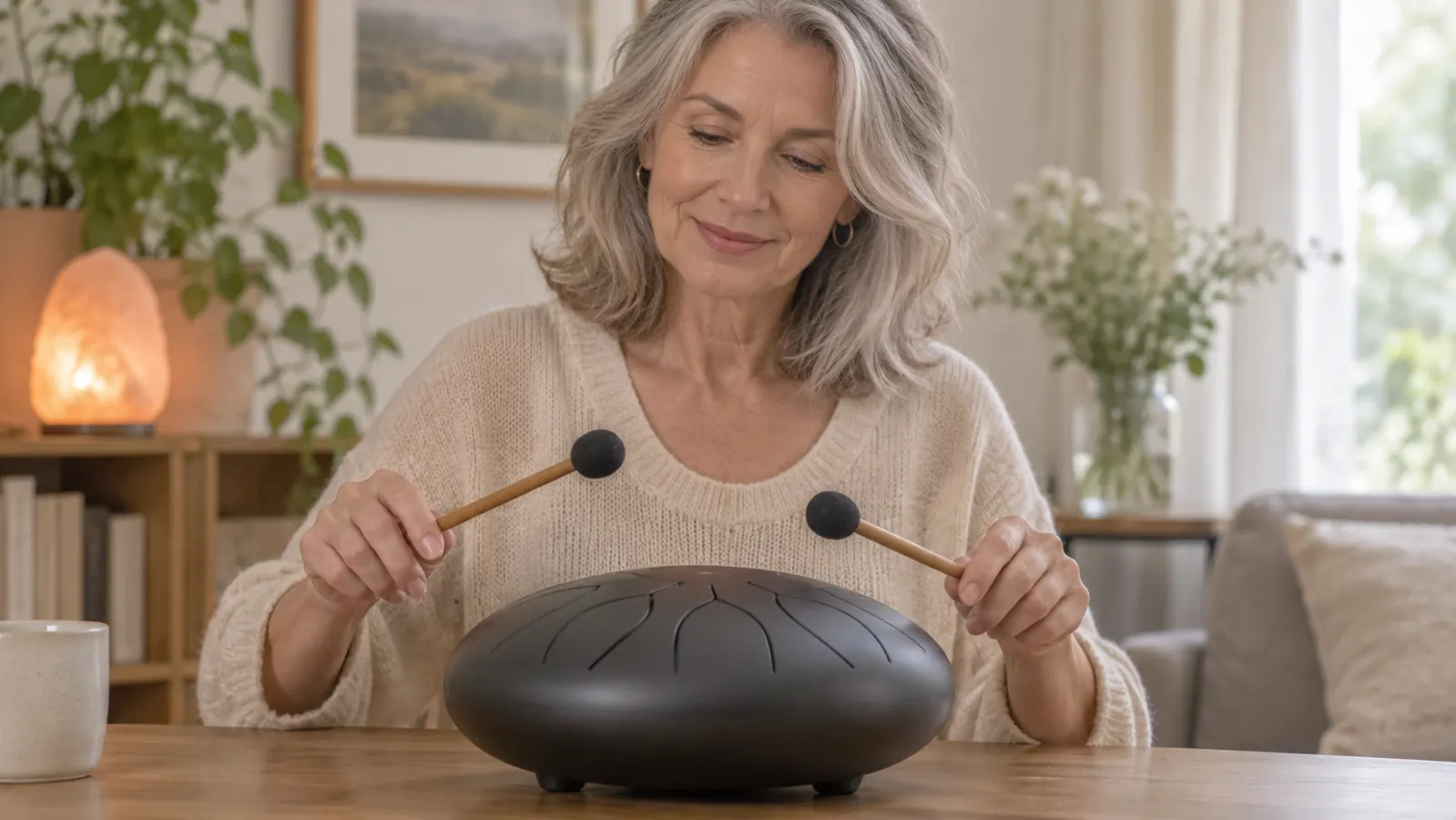
The one I reach for every morning is the HOPWELL 15-note steel tongue drum. It weighs 4.3 pounds, sits on a low table in my sunroom, and makes a sound the listing calls 'clear and melodic,' which undersells it. It is not a handpan, and pretending otherwise does nobody any favors. It is, however, the instrument that actually gets played in this house, morning and night, and for a beginner at home that matters more than any other spec on the page.
The Honest Difference in One Table
| HOPWELL Steel Tongue Drum | Typical Handpan | |
|---|---|---|
| Price | A fraction of the cost | Many times more |
| Notes | 15 notes in D major, room to roam | Usually 8 to 10 notes, each one lovely |
| Sound | Clear, bright, melodic | Softer, deeper, longer sustain |
| Learning curve | Play something recognizable in minutes | More technique, more patience |
| Care and durability | Titanium alloy, painted finish, case included | Delicate, needs careful handling |
| Portability | 4.3 pounds, fits under the arm | Heavier, fragile to travel |
| Warranty | 90-day manufacturer warranty | Varies widely by maker, sometimes none |
| Best for | Beginners, home, daily relaxation | Players who want a concert-grade voice |
Why These Two Get Compared in the First Place
Both are steel instruments you play with your hands, and both make a ringing, meditative sound that people describe the same way: like a music box that grew up. The handpan got the fame, thanks to street performers and a thousand videos, and the tongue drum got the job. If you search for either one, the other shows up in the results, and the confusion is understandable. They even look related from a distance, a shallow steel bowl with notes cut into the top. The difference is in how they are made, how much they cost, and how much courage they ask of you.
The difference matters more than the resemblance. A handpan is hammered from nitrided steel and tuned by hand, which is why it costs what it costs and why makers have waiting lists. A tongue drum is a steel shell with tongues cut into the top, each tongue tuned to a note, and it can be made affordably without losing the charm. One is a precision instrument you protect. The other is a companion you play.
What the Specs Actually Tell You
The listing for the HOPWELL is refreshingly plain. Fifteen notes in a D major key design, it says, and that is the whole story of why it is easy to play. The body is titanium alloy, handcrafted, with a painted finish, and the whole thing weighs 4.3 pounds. Mine has lived on a low table in the sunroom for months and still looks the way it did the day it arrived, which is the painted finish doing its job. The included components are a case and a music book, and the mallets come in the box. That is everything you need and nothing you do not.
The warranty is 90 days from the date of purchase, which I will not dress up. It is a short warranty, and you should know that going in. What I can tell you from daily use is that nothing on mine has needed it. The tongues stay in tune because they are cut into solid steel. There is no mechanism to wear out, no battery to die, no app to update. That simplicity is the quiet reason these drums last. A handpan can go out of tune and needs a specialist to retune it. A tongue drum just sits there and sounds like itself.
Where HOPWELL Wins
Start with the notes. The HOPWELL carries 15 notes in a D major layout, which is more than most handpans offer. A typical handpan has 8 to 10 notes, and that is not a criticism of the handpan, because those notes are voiced beautifully. But for a beginner, 15 notes in D major means more room to wander, more melodies to find, and a layout where almost anything you play sounds intentional. You do not need theory. You do not need to read music. You press a tongue, and the note is already in tune.
Then there is the everyday reality. The HOPWELL is 4.3 pounds of titanium alloy with a painted finish, which means you can leave it on a table, knock it with a coffee mug, and not panic. It comes with a carry case, a music book, and a pair of mallets, so the first session can happen the evening it arrives. The warranty is 90 days from purchase, which is honest for an instrument in this range. And the whole thing costs a fraction of what a handpan costs, which matters when you are not sure yet whether you will still be playing in six months. Most beginners are not sure. That is normal, and it is exactly why starting smaller is the smarter move. You can always trade up later, and plenty of people do.
Where the Handpan Wins
I am going to be straight with you, because a comparison that concedes nothing is just an ad. The handpan sounds better. Not louder, not brighter, better in the way that matters: softer, deeper, with a longer sustain and a more complex voice that hangs in the air. The HOPWELL is clear and melodic, and I love it, but the handpan has a warmth the tongue drum cannot quite reach. If sound alone were the only question, the handpan would win, and I would tell you so.
The handpan also wins on feel and on craft. You play it with your hands, not mallets, and the response under your palms is part of the experience. It is hammered and tuned by artisans, and a good one holds its value in a way a tongue drum never will. But those strengths come with real costs. The price is many times higher. The instrument is fragile enough that you think twice before taking it anywhere. And the wait for a quality maker can stretch for months. For a beginner at home who wants to play tonight, that is a lot of weight for a question that has not been answered yet.
Fifteen notes in D major, 4.3 pounds, case included. That is the difference between an instrument you play every day and one you watch on a screen.
Play Something Tonight, Not Next Year
The HOPWELL 15-note steel tongue drum arrives with mallets, a music book, and a carry case. Fifteen notes in D major, titanium alloy, 4.3 pounds. You can be making sound five minutes after the box opens, and the box is the only thing you have to wait for.
Amazon Check Today's Price on Amazon →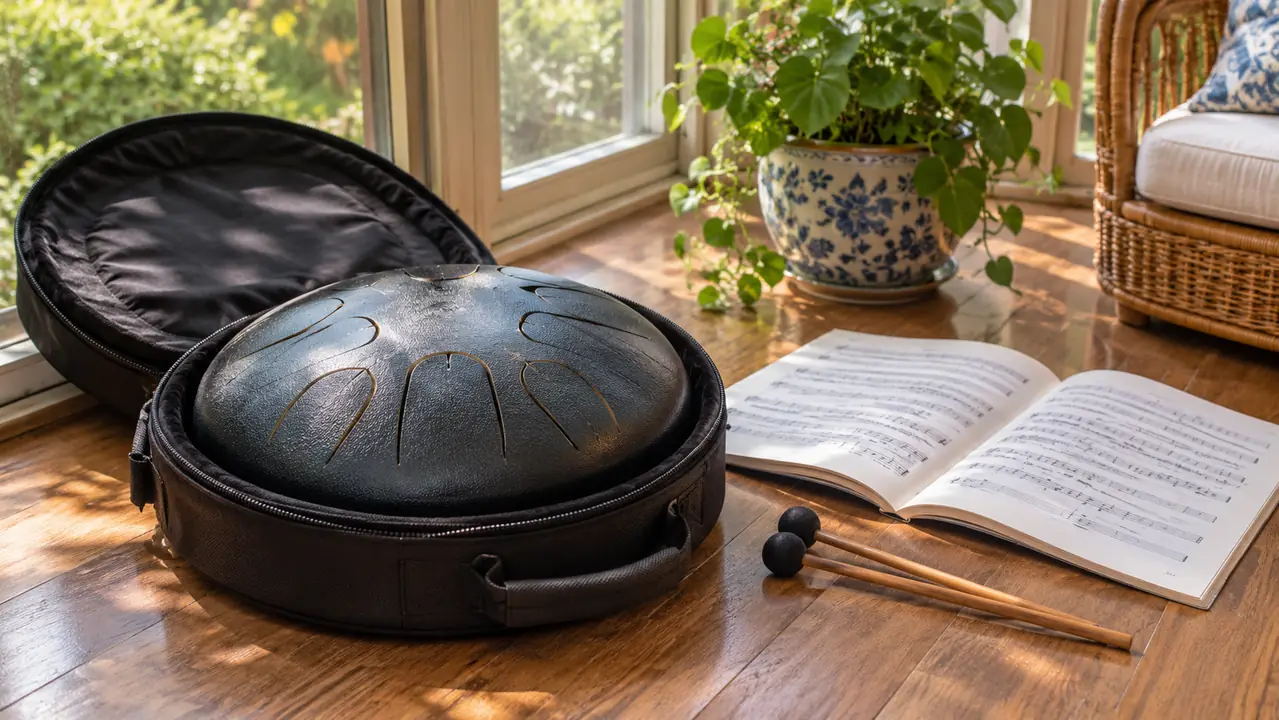
What Playing One Actually Feels Like
I play for about ten minutes most mornings, with coffee, and again at night before bed. That is the whole routine, and it is the point. I have no formal training. I played piano badly as a kid and gave it up, and for decades I thought that meant instruments were not for me. The tongue drum undid that idea in one evening. There are no wrong notes in D major, or at least none I have found, and the sound fills my small sunroom without demanding anything back. The mallets are light, the touch is gentle, and the drum answers without complaint.
My husband Walt claims he is tone deaf, and he still taps his foot when I play, which I count as a win. I spent 24 years in community mental health work, and I used to bring a small hand drum to group sessions because it got people talking. I will not tell you an instrument treats anything, because it does not, and if you are dealing with real anxiety or depression, please talk to a licensed professional. What I will say is that a ten-minute routine with a drum is a reliable way to slow the evening down. That is not therapy. It is a good chair and a quiet room, in instrument form.
The Price Question Nobody Wants to Ask
Let us talk about money without getting awkward about it. A decent handpan costs many times what a tongue drum costs, and the gap is not a markup, it is the labor. Hand-hammering and hand-tuning steel takes a person days. The HOPWELL is made affordably because cutting tongues into a steel shell is a faster process, and the savings pass to you. That is not a knock on the drum. It is the reason a beginner can afford to start at all.
Here is the part that surprised me. The tongue drum holds its value better than you would expect, and the handpan holds its value better than almost anything. But value only matters if you sell, and beginners mostly do not sell, they just stop playing. The cheaper instrument that actually gets played is worth more than the expensive one that stays in its case. I have watched that pattern play out in a hundred small ways over the years, and it is the reason I will always point a beginner at the instrument they will not be afraid of.
How to Decide in One Evening
Here is a test that takes one evening and costs nothing. Order the HOPWELL, or borrow any tongue drum if you know someone who has one, and play it for ten minutes before bed. Not with a goal, not to learn a song, just to make sound. Then ask yourself one question: did the ten minutes feel like a chore or like a pause? That is the whole decision. People who want the pause will play again tomorrow. People who want a performance instrument will feel the pull toward a handpan, and now they know that about themselves.
The mistake I see most often is the opposite order. People buy the expensive instrument first, out of excitement, and then discover they do not actually want to practice, they wanted the idea of practicing. The tongue drum is small enough, affordable enough, and friendly enough that it does not punish you for finding that out. And if you do love it, you have lost nothing. You have gained a daily ten minutes of sound, which is more than most people get.
Who Should Buy Which
Buy the HOPWELL steel tongue drum if you are a beginner, if you want to play at home rather than perform, if you would rather spend your money on a case and a music book than on an instrument you will be afraid to touch. Buy it if you have ever bought a serious instrument and then let it sit in a corner, because this one is light enough and sturdy enough to live out on the table where you will actually use it. There is a long-term review on this site that covers how it holds up with daily play, and the short version is that it holds up.
Consider a handpan if you have been playing for a while, if the specific voice of the handpan is the thing you want, and if you have the budget and the patience to protect a delicate instrument. It is a worthy goal. It is just not the right first step for most people. Start with the tongue drum. Play it for six months. If you still want a handpan after that, you will know exactly what you are buying and why, and the tongue drum will still be there for the mornings when you just want the easy sound.
Give Yourself Ten Minutes a Day
The HOPWELL 15-note steel tongue drum is the low-risk way to find out whether a daily ten minutes of sound belongs in your life. Mallets, music book, and carry case included, and it plays the night it arrives.
Amazon See Today's Price on Amazon →